


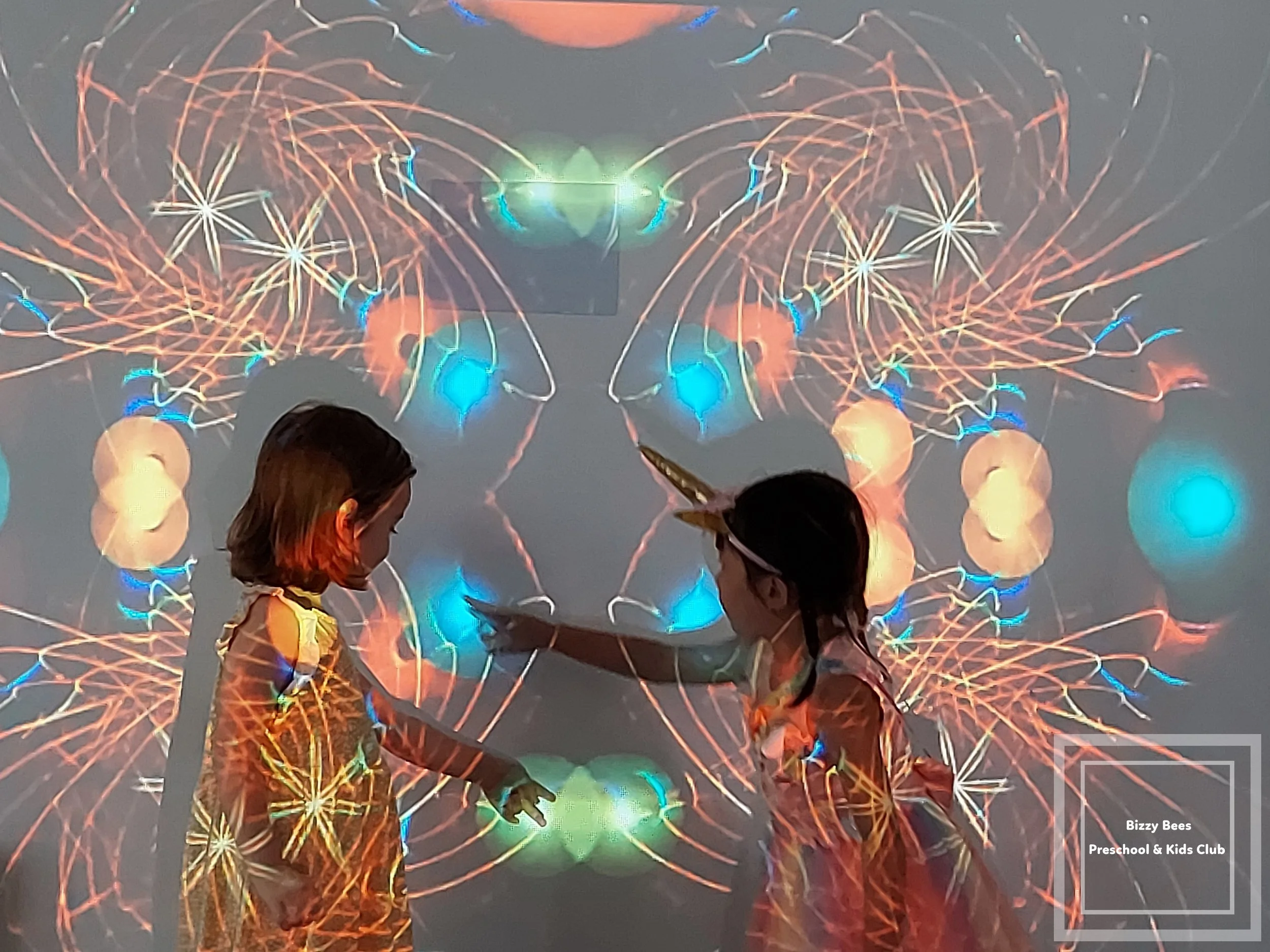
Sparking curiosity and imagination
“I have no special talent; I am only passionately CURIOUS.” A. Einstein
At Bizzy Bees Kindergarten, we believe that curiosity and imagination are important driving forces behind learning, creativity, and personal growth. As educators, we strive to nurture these essential traits in our young learners, empowering them to explore, question, and dream.
Curiosity: The Catalyst for Learning
The Power of Genuine Interest
Children learn best when they are genuinely curious about the world around them. Imagine a child fascinated by how flies find food so effortlessly, that curiosity becomes a catalyst for researching and learning and he will remember his findings forever. Albert Einstein, one of the most influential scientist that the world have ever known, once wisely said, “I have no special talent; I am only passionately CURIOUS.” His words resonate even more today, as research confirms that curiosity is a key driver for learning and personal development.
Encouraging Curiosity
Parents often notice their little ones asking countless questions—why this, why that? These inquiries are precious moments to celebrate! Unfortunately, in many traditional school settings, curiosity takes a back seat to rigid tasks and memorization. At Bizzy Bees, we take a different approach. We encourage children to ask questions, explore, and seek answers. If we don’t know the answer, we acknowledge it and embark on a joint investigation. Curiosity is a gift we unwrap every day, both at home and in our classrooms.
Imagination: Where Creativity Blooms
Unlocking Creative Solutions
Imagination isn’t just about daydreaming, it’s a powerful skill for problem-solving and innovation. When we have vivid imaginations, we can envision new solutions to existing and new problems or create original works of art, culinary delights, and more. Albert Einstein’s words echo this truth: “Imagination is more important than knowledge. For knowledge is limited, whereas imagination embraces the entire world, stimulating progress and giving birth to evolution.”
Nurturing Imagination and curiosity at Bizzy Bees
At Bizzy Bees, our teachers encourage and develop both curiosity and imagination through intentional practices during the different activities of the day. Here are some examples of how we do it:
Asking “What If?”: During activities, we encourage children to imagine. Whether it’s predicting what happens next in a story or brainstorming reasons behind natural phenomena, we celebrate their creative thinking.
New Perspectives: We introduce new objects, subjects, and activities to spark curiosity. A magnified plant leaf, hidden toy snakes in sand, or a captivating science experiment—all fuel curiosity and imagination. •
Positive Reinforcement: When a child demonstrates curiosity or imaginative thinking, we celebrate their efforts. Praise and encouragement go a long way in nurturing these traits.
Free Play: Unstructured playtime allows children to invent stories, build with blocks, and create their own games with their own rules. Our teachers observe and sometimes gently guide to ensure imagination flourishes.
Open-Mindedness: We foster an environment where children appreciate each other’s ideas. Everyone feels safe to express their imagination, knowing it’s valued.
Hands-On Experiments: Bizzy Bees is a place of active exploration. Through experiments, children learn by doing, igniting their curiosity and sparking imaginative ideas.
Lead by Example: Our teachers model curiosity and imagination, inspiring a mirror response in our young learners.
At Bizzy Bees Kindergarten, we celebrate curiosity and imagination as key engines of growth and learning. Together, let’s nurture these traits, allowing our children to soar into a world of wonder, creativity, and boundless possibilities. And, if the question about the flies kept you thinking, the answer in that flies have two noses, one on each side, so they easily find their way to the food. The question was asked by a 5-year old child and adults had to ask Google.
