


Social Emotional Skills
Social-Emotional Learning at Bizzy Bees Bilingual Kindergarten
At Bizzy Bees, we believe that social-emotional learning (SEL) is just as vital as academic skills. It’s the foundation that helps children grow into confident, empathetic, and resilient individuals. From the earliest years, learning to understand and manage emotions lays the groundwork for success—whether as a student, professional, friend, or family member. The earlier this learning begins, the more natural and impactful it becomes.
What Are Social-Emotional Skills, and Why Do They Matter?
Social-emotional skills shape the way we interact with the world. These skills help us recognize, understand and regulate our own emotions as well as understand and respect the feelings of other, fostering empathy and kindness, allowing us to build strong relationship. They also help us communicate effectively, resolve conflicts, and navigate social situations with confidence. A child who can express emotions effectively, manage frustration, and empathize with others is more likely to thrive—in school, friendships, and life. Children who develop these skills early tend to be more focused, communicate better, and handle challenges with confidence. They form meaningful friendships, navigate conflicts with empathy, and feel more connected to the world around them. In school, SEL fosters positive behavior, improves academic performance, and even lowers the risk of bullying.
How Bizzy Bees Nurtures Social-Emotional Growth
At Bizzy Bees, every moment is an opportunity to build emotional intelligence. Whether it’s during circle time, lunchtime, free play, or team activities, teachers encourage children to recognise and express their feelings while understanding the emotions of others. Some moments are planned—like reading a story about a little girl whose toy breaks, helping children explore sadness and frustration. Other moments unfold naturally, such as when a child feels upset after a friend accidentally knocks over their tower. These real-life situations become powerful learning experiences where children practice emotional regulation, problem-solving, and empathy.
The Role of Free Play
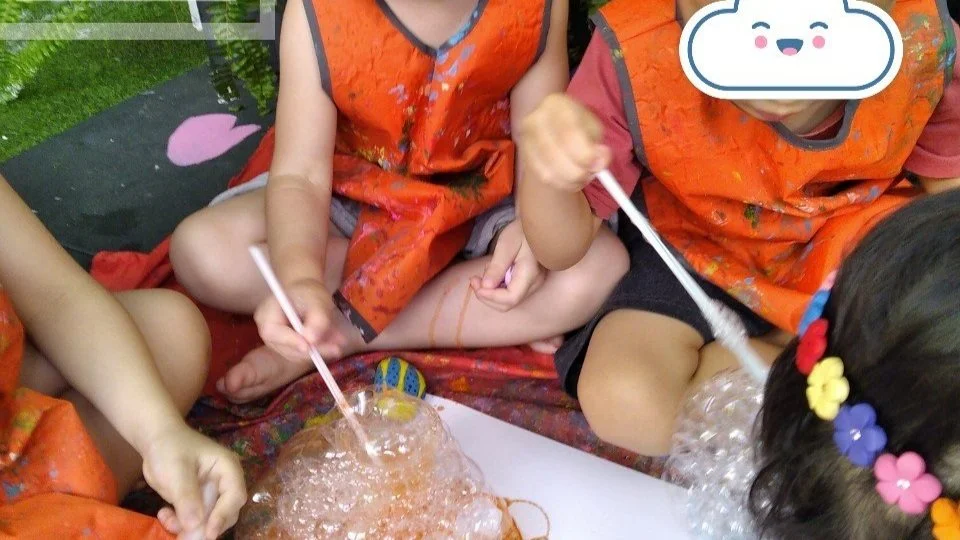
Free play is especially valuable for social-emotional development. When children engage in play, they learn to negotiate, compromise, and establish rules—whether spoken or unspoken. Teachers observe, guide, and coach them through emotional interactions, helping them navigate friendships and manage feelings in a supportive environment. Through play, children build the confidence to express themselves, understand others, and develop the skills they’ll carry with them for life.
A Thoughtful Approach to Emotional Learning
Our teachers use a variety of engaging techniques to deepen children’s emotional understanding. They help children recognize emotions in facial expressions, guess how characters in a story might feel, and reflect on their own emotions—what triggered them and why. They introduce strategies to manage strong feelings and encourage perspective-taking, asking children how they would feel in a similar situation. Role-playing allows children to practice handling conflicts, while teachers model emotional intelligence by responding with warmth, empathy, and composure. Encouraging children to express their emotions is greatly facilitated because Bizzy Bees creates a secure and inclusive environment. Here, every child feels valued, heard, and safe.
Inspired by Finnish Early Childhood Education
Bizzy Bees draws inspiration from Finland’s renowned early childhood education system, where social-emotional learning is a key pillar. Through our collaboration with HEI Schools in Finland, our teachers receive specialized training designed by experts in SEL, ensuring children receive the best guidance in their emotional growth.
SEL Beyond the Classroom
Social-emotional learning doesn’t stop at school—it thrives when caregivers actively support it at home. Parents, grandparents, and siblings play a key role in reinforcing these skills. Whether it’s asking children about their feelings, listening with patience and understanding, offering a comforting hug, or demonstrating calmness during emotional moments, every interaction is an opportunity to nurture emotional growth. Recognizing when strong emotions might arise and preparing children through open conversations helps them feel more secure. Simple gestures—like using a gentle tone or guiding a child through frustration—create a powerful impact.
Bizzy Bees also organizes workshops for parents to discuss and share insights on Social-Emotional Learning at home to help their kids understand and manage their emotions.
A Lifelong Journey
Emotional learning is an ongoing journey—for children, parents, and teachers alike. As we guide little ones, we are also learning ourselves, continuously growing alongside them. Together, let’s create a world where empathy, resilience, and emotional intelligence flourish.
